
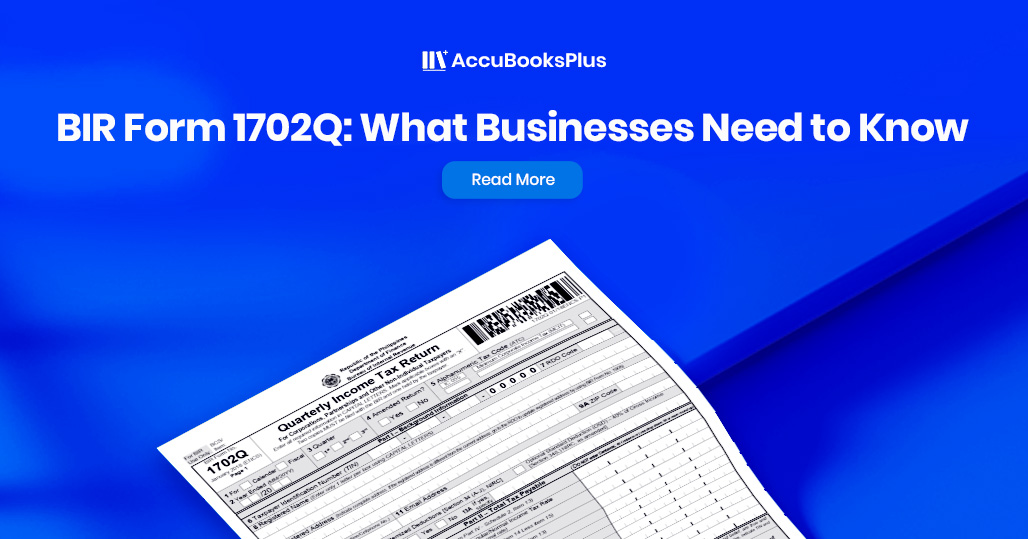
Tax deadlines can be stressful, especially when financial records are incomplete or scattered. For corporations, partnerships, and other non-individual taxpayers, one important requirement is BIR Form 1702Q.
Knowing what this form covers and preparing your records early can help your business avoid errors, delays, and possible penalties.
What Is BIR Form 1702Q?
BIR Form 1702Q is the Quarterly Income Tax Return used to report a business’s income, expenses, tax credits, and income tax due for the quarter.
It is generally filed for the first three quarters of the taxable year. The fourth quarter is included in the applicable annual income tax return under the BIR Form 1702 series.
Who Needs to File It?
BIR Form 1702Q generally applies to:
- Corporations
- Taxable partnerships
- Associations
- Joint stock companies
- Other non-individual taxpayers covered by BIR rules
Businesses should check their BIR registration and tax classification to confirm their specific filing requirements.
When Is It Due?
BIR Form 1702Q must generally be filed within 60 days after the end of each of the first three quarters of the taxable year.
Businesses should prepare updated records of their:
- Sales and other income
- Cost of sales or services
- Allowable business expenses
- Creditable withholding taxes
- Previous quarterly tax payments
- Other applicable tax credits
These figures are used to determine the business’s taxable income and any tax still payable for the quarter.
Common Filing Challenges
Errors often happen when transactions are recorded late, expenses are classified incorrectly, or supporting documents are missing. Unrecorded BIR Form 2307 certificates may also affect the amount of creditable withholding tax that a business can claim.
Preparing only a few days before the deadline can make these problems harder to identify and correct.
Make Tax Preparation Easier with AccuBooks Plus
AccuBooks Plus helps businesses keep their financial records organized and ready for tax season. With transactions recorded in one cloud-based system, you can easily review your income, expenses, and tax information.
AccuBooks Plus can help you:
- Organize daily accounting transactions
- Generate updated financial reports
- Prepare supported BIR forms using recorded data
- Reduce repeated data entry and manual errors
- Monitor business performance
- Keep records accessible for review
Instead of gathering information from different files every quarter, your business can maintain more complete and consistent records in one place.
Do not wait until the deadline to organize your books. With AccuBooks Plus, tax preparation becomes simpler, faster, and less stressful.
Stay organized. Stay prepared. Manage your business better with AccuBooks Plus. Book a free demo today.
Frequently Asked Questions
Who should file BIR Form 1702Q? It generally applies to corporations, partnerships, and other non-individual taxpayers required to pay income tax.
Is BIR Form 1702Q filed every quarter? It is generally filed for the first three quarters. The fourth quarter is covered by the applicable annual income tax return.
What is the filing deadline? The general deadline is within 60 days after the end of each of the first three quarters.
What documents should businesses prepare? Businesses should maintain updated accounting records, expense documents, sales records, proof of previous tax payments, and applicable withholding tax certificates such as BIR Form 2307.
What happens if the form is filed late? Late filing or payment may result in penalties, interest, and other charges imposed by the BIR.
Can AccuBooks Plus file the form automatically? AccuBooks Plus helps organize transactions and prepare supported BIR forms. The taxpayer or authorized representative should still review and submit the return through the proper BIR filing platform.
This article is for general information only. Always check the latest BIR guidelines or consult a tax professional for requirements specific to your business.
Leave a comment