
Picture this: it's the third week of the quarter, and somewhere between restocking inventory and answering customer messages, a familiar thought creeps in. Wait, when is percentage tax due again?
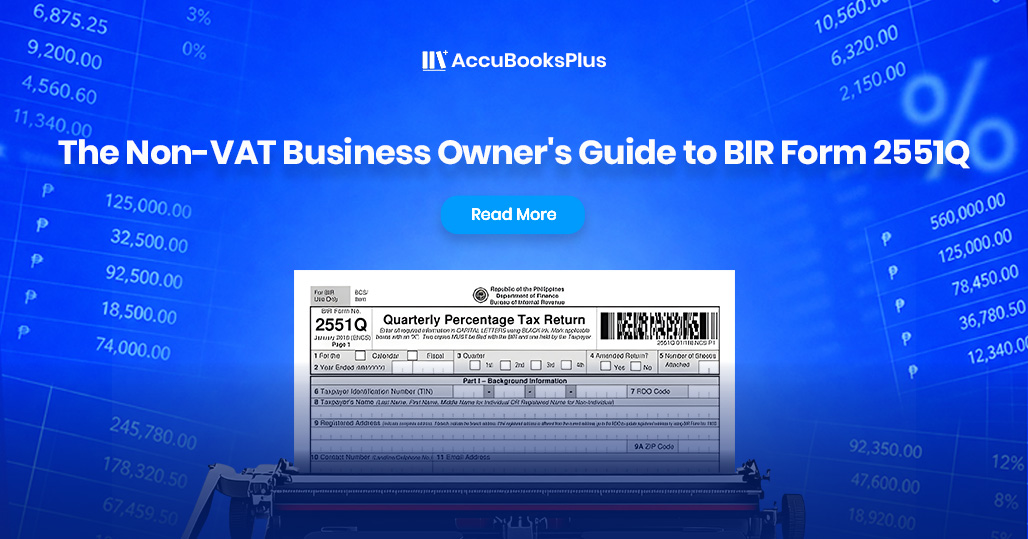
If that sounds familiar, you're not alone. BIR Form 2551Q quietly governs the tax life of a huge number of small businesses in the Philippines, freelancers, sari-sari stores, repair shops, consultants, and anyone else operating below the VAT threshold. It doesn't get talked about as much as VAT does, but missing it carries the same real consequences.
Here's what actually matters about 2551Q, broken down into five things worth knowing.
1. It's a Flat Tax, Not a Balancing Act
Unlike VAT, which involves netting output against input tax, percentage tax keeps things simple: 3% of your gross quarterly sales or receipts, full stop. No offsets, no credits, no reconciling two sides of a ledger.
That simplicity is intentional. Percentage tax under Section 116 of the NIRC exists to give smaller businesses, those under the ₱3,000,000 annual threshold, a lighter compliance burden than full VAT registration would require.
2. Not Everyone Below the Threshold Files It
Here's a detail that trips up a fair number of new business owners: being non-VAT doesn't automatically mean you file 2551Q. If you're a self-employed individual or professional who opted into the 8% flat income tax rate, that option already absorbs your business tax obligation. Once your registration reflects it, you're exempt from percentage tax filing entirely.
The safest way to know for sure? Check your Certificate of Registration (Form 2303) directly. It states exactly which tax types apply to you, no guessing required.
3. The Deadline Rhythm Never Changes
Whatever quarter it is, the rule stays the same: file within 25 days of the quarter's close.
- Q1 (Jan–Mar) → April 25
- Q2 (Apr–Jun) → July 25
- Q3 (Jul–Sep) → October 25
- Q4 (Oct–Dec) → January 25
Weekend or holiday deadlines usually roll over to the next working day, but that's not guaranteed for every year or region, so it's worth a quick check against the BIR's official calendar each time.
4. The Tax Is Easy. The Prep Isn't.
Multiplying gross sales by 3% takes seconds. Getting to an accurate gross sales figure is where most of the actual work hides.
For businesses still tracking sales through notebooks, loose receipts, or spreadsheets that don't quite sync with the bank account, quarter-end often turns into a scramble: matching deposits to sales, chasing down missing entries, separating personal transactions from business ones. None of it is difficult individually. It's just tedious enough to eat an entire afternoon, every single quarter.
AccuBooks takes a different approach: instead of piecing sales together after the fact, it logs each transaction the moment it happens. By the time the 25th rolls around, your gross sales figure isn't something you have to build. It's already there, waiting to be checked, not calculated from scratch.
5. The Penalties Don't Care How Small the Tax Is
It's tempting to treat 2551Q as lower priority than VAT filings, since the amounts owed are often smaller. The penalty structure disagrees:
- 25% surcharge on the tax due
- 12% annual interest on the unpaid amount
- A compromise penalty, generally ₱200 to ₱50,000
A small percentage tax bill filed late can still cost meaningfully more than the tax itself. Treat every 25th the same way, regardless of how small the number looks.
Frequently Asked Questions
What's the difference between 2551Q and 2550Q? 2551Q applies to non-VAT businesses under the ₱3,000,000 threshold, taxed at a flat 3% of gross sales. 2550Q applies to VAT-registered businesses and involves computing net VAT from output and input tax. Your Form 2303 will tell you which one applies to you.
Is percentage tax creditable against my income tax? No. It's a separate business tax and doesn't reduce your income tax liability when you file your annual return.
What happens if my sales grow past the VAT threshold? You'll need to update your registration to VAT status and begin filing 2550Q instead, along with the additional reporting requirements that come with VAT registration. It's worth planning this transition with your accountant before it happens.
Where do I get the official form? Download it directly from bir.gov.ph to make sure you're using the current version.
This article is for general informational purposes and isn't a substitute for advice from a licensed accountant or tax professional. BIR rules and deadlines can change, so always confirm current requirements on the official BIR website.
Leave a comment